Storm demand is a two-week spike, not a trend
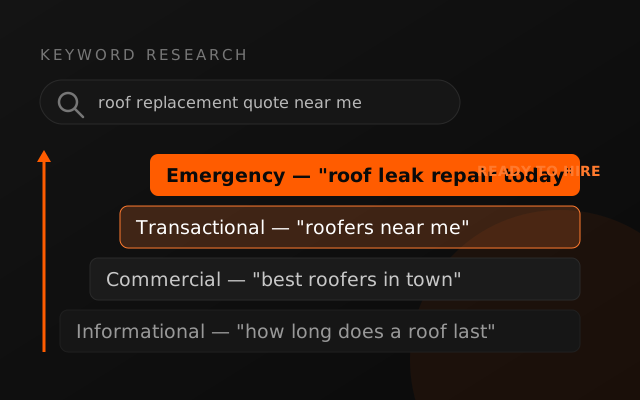
Homeowners don't think about their roof until water is coming through the ceiling. The moment a storm passes, thousands of them reach for their phone at once — and then, within a fortnight, that urgency fades as the obvious leaks get patched.
This is what that surge looks like in search data. Notice how flat demand is normally, and how violently it spikes the day after a storm:
The 14-day plan, day by day
The sprint splits into three phases: get findable fast, publish the content homeowners are searching for, then convert the traffic into booked inspections. Here's how the two weeks break down:
Days 1–3 · Go live
Publish a storm-damage landing page, fire off Google Posts, and switch the Business Profile to storm mode.
Days 4–9 · Answer
Ship the pages homeowners search: insurance claims, "is my roof damaged," emergency tarping, free inspections.
Days 10–14 · Convert
Add urgency CTAs, click-to-call, and review requests from every job so momentum carries into next storm.
Publish the storm-damage landing page (Day 1)
One focused page targeting "[city] storm damage roof repair" — what to do first, insurance help, emergency tarping, and a big click-to-call button. This is the page the whole sprint points traffic at.
Flip the Google Business Profile into storm mode (Days 1–2)
Google Posts announcing emergency availability, updated services, and fresh photos of the exact storm's damage. Google surfaces active, timely profiles first.
Answer the questions homeowners actually type (Days 4–9)
"Will insurance cover my roof?", "How do I know if hail damaged my roof?", "What does emergency roof repair cost?" Each becomes a short, genuinely helpful page that ranks fast because demand is high and competition is asleep.
Convert the surge, then bank the reviews (Days 10–14)
Every inspection becomes a review request. Those reviews raise your prominence permanently — so you rank higher before the next storm even starts. The sprint compounds.
Prepared vs. reactive: the same storm, two outcomes
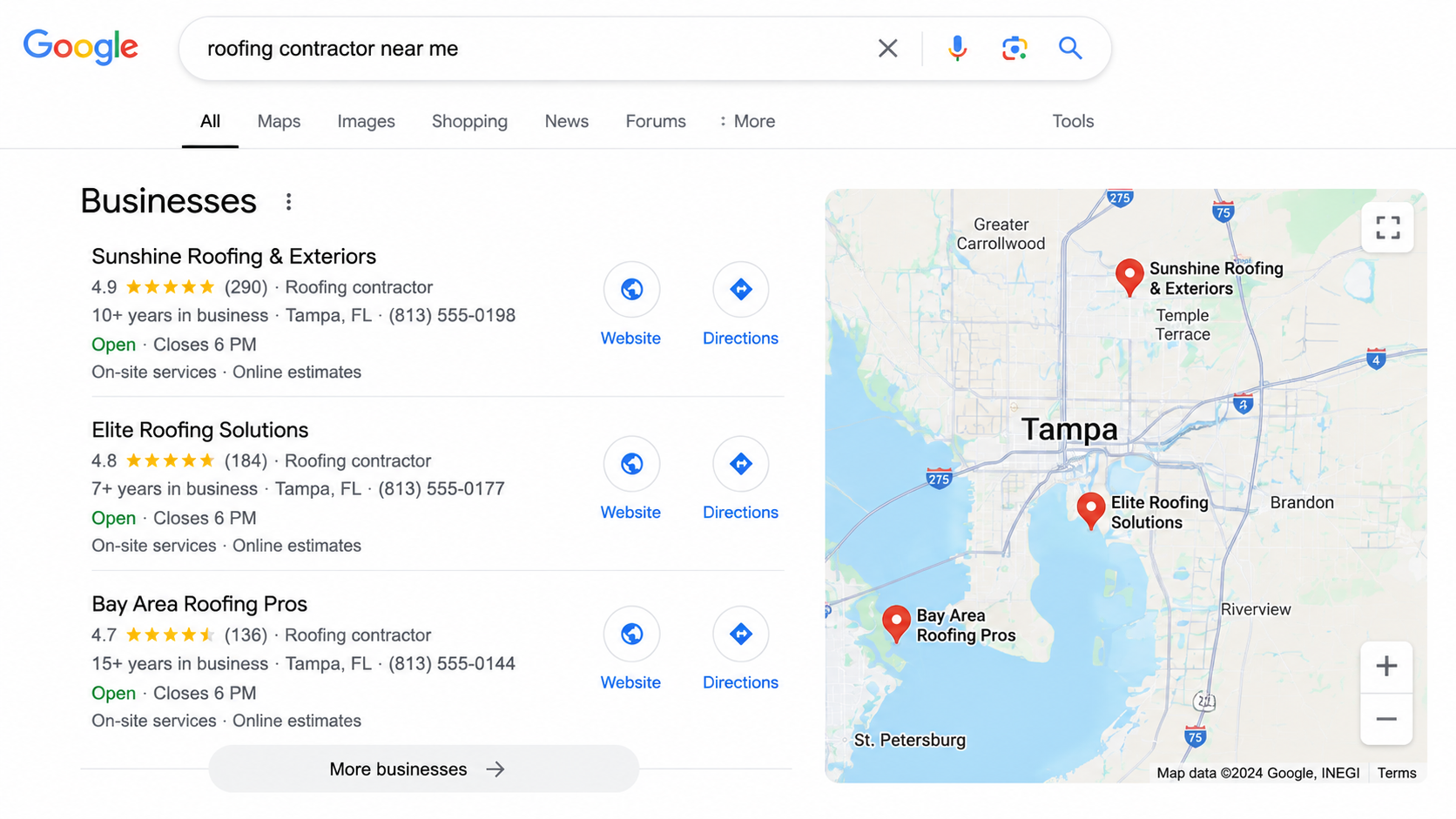
Storm season is won before the storm. Keep a storm-damage page live year-round, keep your profile active, and have the sprint checklist ready to fire the moment weather hits. This exact sprint drove a big share of the results in the 3-pack case study.
More from the field